Key takeaway
ChatGPT conversion ads are real, but they are not a plug-and-play extension of your Google or Meta setup. The intent layer is different, the creative requirements are different, and the attribution infrastructure is still forming. The right move right now is to get access, run a controlled test in a high-consideration vertical, and collect conversion signal before the field crowds. I would not reallocate primary budget here yet. I would absolutely get in before the self-serve flood opens and erases any calibration advantage.
Performance marketers now have access to a new ad surface built inside the most active AI chat product in the world. ChatGPT conversion ads are campaigns optimized for downstream actions, not just clicks, running inside ChatGPT sessions. OpenAI confirmed the rollout to select advertising partners in May 2026, and the platform is not a small test bed. OpenAI reported over 600 million weekly active users as of Q1 2026, making it the largest single AI surface now accepting conversion-optimized campaigns.
The question is not whether ChatGPT ads matter. The question is whether you should test them now, or wait and get priced out of the learning curve.
What are ChatGPT conversion ads and how do they work?
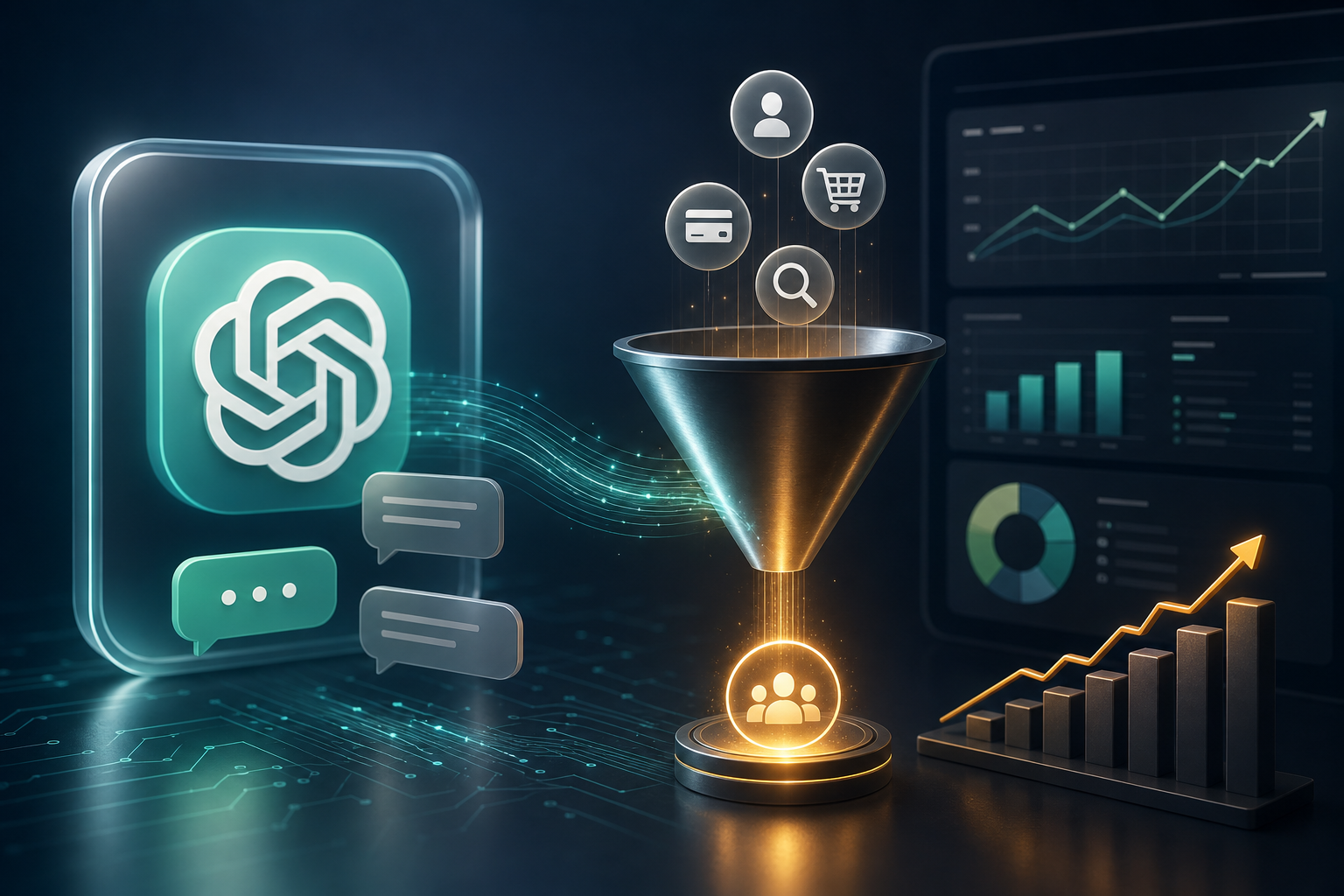
ChatGPT conversion ads are campaigns that run inside the ChatGPT interface and optimize toward a specific downstream action. That action could be a form fill, a purchase, a trial signup, or any event you define on your site or app. The system tracks a path from ad exposure inside a chat session to a conversion event outside it.
This is not a display banner sitting above a search result. The ad appears inside a problem-solving conversation. A user asks ChatGPT how to choose an HR software tool. A sponsored result appears in or alongside the response. The click path goes to your landing page. A conversion pixel fires. OpenAI's optimizer logs the signal and adjusts future delivery toward similar sessions.
The initial rollout is limited to select advertising partners. There is no confirmed self-serve open date as of May 2026. Most agencies are on a waitlist. That gap between partner access and public availability is exactly where calibration advantage lives.
How is ChatGPT ad targeting different from Google and Meta?
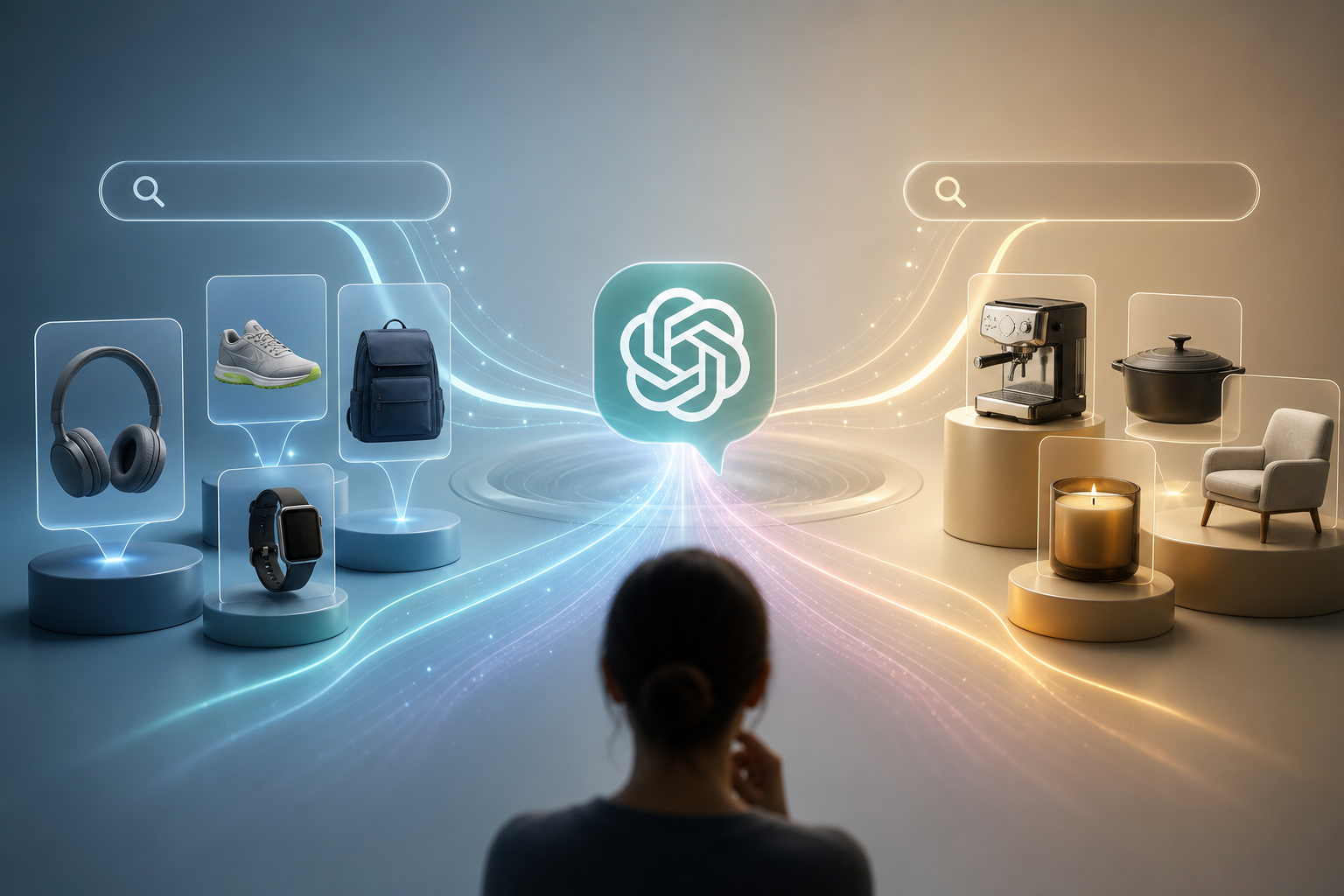
Google matches ads to queries. Meta matches ads to behavioral profiles built over years of scroll, click, and purchase data. ChatGPT matches ads to active problem-solving conversations. That is a different intent layer entirely.
A user on Google Search types "project management software." They might be researching, comparing, or ready to buy. The query alone does not tell you which. A user inside ChatGPT asking "what project management tool works best for a remote team of twelve with a tight budget" is already mid-decision. The context is richer, and it is right there in the session.
I have seen this intent-quality gap show up in Google AI Overview-adjacent placements at AtheonX. Clicks from those placements convert at a different rate than standard search because the user has already consumed more context before clicking. ChatGPT placement context is likely to behave the same way, or more pronounced.
There is no confirmed behavioral graph at launch. Early targeting is almost certainly keyword and topic-category based, not audience-segment based. That is a real limitation. But it also means the targeting floor is built on conversational context, not inferred interest from unrelated browsing.
What does OpenAI's conversion tracking actually measure?
This is the part most agency takes skip, and it is the most important part to understand before you spend anything.
ROI-focused optimization means the algorithm shifts delivery toward exposures that correlate with conversions. That is the same logic Meta Advantage+ uses. The optimizer needs signal to calibrate. Early in a campaign, it is guessing. It gets less wrong as conversion data flows in. If you scale spend before the optimizer has enough signal, you burn budget in the learning phase and then point to bad CPAs as proof the platform does not work.
I used to make this mistake on Meta. I would launch a campaign with a daily budget that forced the algorithm to exit the learning phase before it had enough data. The CPAs looked terrible. The platform looked broken. The real problem was I did not give it time to calibrate against a meaningful volume of conversions.
Attribution windows and pixel-equivalent tracking specs were not fully disclosed as of the May 2026 rollout. That is normal for a limited beta. It is also a reason to get in early. Teams that start feeding conversion signal into OpenAI's optimizer before the self-serve flood opens will have a data lead that latecomers cannot close quickly. The early-mover advantage here is algorithmic, not audience-based.
For now, plan for a black-box calibration period. Budget for it. Do not let finance pull the plug during it.
Which brands and verticals should test ChatGPT ads first?
My rule here is simple: if your buyer already uses ChatGPT to research your category, you have a test case. If they do not, you are paying to introduce the behavior, which is a harder and slower bet.
High-consideration B2B and SaaS buyers already use ChatGPT for vendor research. They ask it to compare tools, surface criteria, and explain technical concepts. Ads placed inside those sessions are not interrupting anything. They are appearing in a context where the user is already in the decision process.
Developer tools, productivity software, and financial services brands fit this profile. They have AI-native audiences already inside ChatGPT. A developer asking Opus 4.7 to help them debug a deployment pipeline is a real buyer for infrastructure tooling. Appearing in that session, with relevant context, is a different kind of placement than a Google Display banner.
Direct-to-consumer brands with educational content angles also fit. A skincare brand that leads with ingredient science fits better than a brand that leads with "sale ends Sunday." The conversational format rewards explanation, not urgency.
Brands that should wait: pure impulse-purchase DTC, local service businesses without national conversion infrastructure, and any vertical where the buyer is not already using AI tools for research.
What is the mistake most performance marketers will make here?
Most will port their Google Search playbook directly into ChatGPT, and it will not work.
Google Search ad creative is built for a two-second scan. Short headline. Quick benefit statement. Extensions to fill the rest. That format was designed for a user whose intent you captured in eight words and who will make a decision in less than a second of reading.
ChatGPT is a problem-solving environment. The user is reading a detailed response. They are thinking. A headline built for a two-second scan interrupts rather than fits into that context. Conversational ad copy, copy that sounds like it belongs in a dialogue about solving the problem, is going to perform differently than repurposed search headlines.
The second mistake is chasing reach before conversion calibration is stable. The platform is in a limited partner beta. Reach is not the value right now. Signal collection is. Spend enough to feed the optimizer. Do not spend enough to crash your CAC before you know what you are working with.
The third mistake is treating ChatGPT as a retargeting surface. It is not built for that yet. No behavioral graph means no audience-level retargeting in the current structure. Use it as a top-to-mid-funnel education channel. Let Google and Meta handle retargeting until OpenAI opens audience segmentation tools.
This same pattern played out with Meta Advantage+. OpenAI released conversion optimization before releasing audience controls. Meta did the same thing. Teams that waited for full feature parity missed the cheapest CPMs of the platform's early life. Getting in during limited controls, with a capped test budget, is the right move.
How should ChatGPT ads fit into an AI-first media mix?
ChatGPT ads belong in the same part of your planning conversation as Perplexity sponsored answers and Google AI Overview placements. They are AI-native surfaces where intent is captured inside a generative response. They are not replacements for Google Search or Meta social. They are a third lane.
The practical media mix question for Q3 and Q4 2026 is how much budget to allocate to experimental AI surfaces as a group. I would not reallocate primary budget from a working Google or Meta setup to test this. I would carve out a test line item, probably 5 to 10 percent of total paid budget, spread across AI-native surfaces where you have partner access.
ChatGPT is the largest of those surfaces by active user count. If you have to pick one AI-native surface to test first, this is the one. Perplexity ads exist and are running, but the user base is smaller and the advertiser infrastructure is less developed.
The internal link worth reading alongside this one is Search Everywhere Optimization Pyramid for Conversion Design. The intent layer logic in that piece applies directly to how ChatGPT placement context behaves inside a buyer's research session.
The calibration data you collect in the next six months has a shelf life. Once self-serve opens and every agency floods in, CPMs will normalize upward, the optimizer will have more data but also more noise, and the advantage of early signal collection shrinks. The window is now, not next year.
What should marketers actually measure to decide if ChatGPT ads are worth scaling?
Three things, in this order.
First: cost per qualified lead compared to Google Search and LinkedIn in the same quarter. Not compared to Meta broad audience. Meta broad is a low bar. Google Search and LinkedIn are the relevant benchmarks for high-intent B2B and SaaS acquisition, which is where ChatGPT is most likely to perform early.
Second: whether OpenAI releases audience segmentation tools before the end of 2026. Keyword and category targeting has a ceiling. Audience-level controls, even basic ones like company size or job function for B2B, would change the performance ceiling dramatically. Watch for this announcement. It will change the budget conversation.
Third: third-party attribution integration. Whether your finance team accepts the conversion data depends almost entirely on whether it flows into the measurement tools they already trust. Triple Whale, Northbeam, and similar platforms need to integrate with OpenAI's attribution API before most DTC brands can justify meaningful budget. B2B teams on HubSpot or Salesforce need the same. This is the friction point that will slow adoption more than ad quality or targeting limits.
My rule for scaling any new ad platform is this: I do not scale until I can explain the CPA to someone who did not run the test. If you cannot show the data in a tool finance already reads, you will keep having the same budget approval conversation every quarter.
For teams thinking about AI implementation across their paid stack more broadly, Strategic AI for Founders: Fix Revenue Leaks First is the framing I use before touching any new channel investment. And if you are a performance marketer at an agency navigating the broader question of AI-native channel adoption, Why It Gets Hard to Justify AI Spending will give you the internal argument structure you need.
ChatGPT conversion ads are real. They are not a plug-and-play extension of your current setup. The intent layer is different. The creative requirements are different. The attribution infrastructure is still forming. The right move is to get access, run a controlled test in a high-consideration vertical, and collect conversion signal before the field crowds. I would not reallocate primary budget here yet. I would absolutely get in before the self-serve flood opens and erases any calibration advantage.
If you want to think through how this fits your current media mix and where to run the test, learn more.
<!-- radar:related-start -->
Related reading:
- ChatGPT Ads Audience Lists Are The Next Test
<!-- radar:related-end -->
FAQ
Are ChatGPT conversion ads available to all advertisers right now?
As of May 2026, ChatGPT's conversion-focused ad product is in a limited partner beta with no confirmed self-serve launch date. Most performance marketers and agencies are in a waitlist position. If you run agency-side media spend at scale, the fastest path to early access is through OpenAI's advertising partner program or an existing agency relationship that already holds beta status. Do not build your Q3 media plan around it as a confirmed primary channel yet. Add it as an experimental budget line and move quickly when access opens, because the calibration window before the field crowds is short.
How is ChatGPT ad targeting different from Google Search ads?
Google Search targets based on the keyword a user types, capturing demand that already exists in a specific query form. ChatGPT ad targeting at launch appears to match ads to the topic or category of an active problem-solving conversation. The user is already engaged in a dialogue about how to solve something, which puts them at a different consideration stage than a passive keyword lookup. There is no confirmed behavioral retargeting graph in ChatGPT ads at launch, which means standard audience segmentation playbooks from Google or Meta do not transfer directly. You are buying into a conversation context, not a profile.
What creative format works best for ChatGPT ads?
Creative format specs had not been fully disclosed as of May 2026, so this is an open test question for early access partners. Based on the placement context, conversational framing and educational positioning are likely to outperform short benefit-first copy written for a 2-second visual scan. ChatGPT users are in active problem-solving mode, not browsing mode. An ad that reads like a useful recommendation inside a relevant conversation will likely convert better than standard promotional interruption copy. Testing format length and tone should be a day-one priority once access is live, not an afterthought.
Should I move budget from Google or Meta into ChatGPT ads?
Not yet. I would not reallocate primary budget from a proven channel to an unproven one during a beta period. The right move is to add a controlled experimental budget line, run a test in a high-consideration product or service category, and compare cost per qualified lead against your existing channels over a full quarter. If the signal is strong, scale from there with data behind the decision. Shifting budget before you have comparable attribution data is how you end up defending a bad quarter to a skeptical client or CFO with nothing but platform-reported metrics to show.
How does ChatGPT conversion tracking actually work?
Full technical specs had not been disclosed as of the May 2026 rollout. What OpenAI confirmed is that the ad product supports ROI-focused campaign optimization, which implies some form of post-click or post-session conversion tracking tied to the advertiser's site or app. Whether the implementation uses a pixel, a server-side event, or a third-party measurement integration is not yet public. Budget for an integration and testing phase before treating the conversion data as reliable. The pattern from Meta's early conversion tracking suggests there will be a calibration window before the optimizer produces consistent, trustworthy output.
Is ChatGPT advertising worth testing for B2B companies?
For B2B companies selling high-consideration products or services, ChatGPT is one of the most qualified intent environments available in 2026. Buyers are actively using it to research vendors, compare categories, and build evaluation shortlists. The question is not whether the audience is valuable, the question is whether the ad infrastructure is mature enough to prove ROI to a finance team. Right now the honest answer is: get in early to collect conversion signal, keep budget controlled, and do not scale until attribution data is stable enough to benchmark against your existing cost per qualified lead.
What is the difference between ChatGPT ads and Perplexity ads?
Both are AI-native ad surfaces that place sponsored content adjacent to AI-generated answers, but they differ on scale, audience, and maturity. Perplexity launched its ad product earlier and has had more time to develop targeting and measurement infrastructure. ChatGPT has a significantly larger and more mainstream user base, meaning reach potential is higher once the platform opens fully. Perplexity's audience skews research-focused and often technical. A serious AI-native media strategy in 2026 should be watching both and treating them as distinct placements, not as interchangeable versions of the same thing.
Sources
On this page
- What are ChatGPT conversion ads and how do they work?
- How is ChatGPT ad targeting different from Google and Meta?
- What does OpenAI's conversion tracking actually measure?
- Which brands and verticals should test ChatGPT ads first?
- What is the mistake most performance marketers will make here?
- How should ChatGPT ads fit into an AI-first media mix?
- What should marketers actually measure to decide if ChatGPT ads are worth scaling?