Key takeaway
AI coding tools have removed the technical barrier to building software, so the advantage now belongs to non-technical founders with deep business insight, distribution, and taste rather than coding ability.
Updated : Refreshed source citations, internal links, and formatting throughout.
The technical moat is gone. And that is great news for anyone who is not a developer.
A year ago, if you wanted to build a software product, you had two options. Learn to code. Or find someone who could. Either way, there was a gate between you and your idea.
That gate does not exist anymore.
In 2026, AI is writing a serious share of the world's code. Not AI-assisted. AI-generated. Estimates vary by how you measure it, but the direction is not in dispute: something fundamental has changed about who gets to build things.
The term “vibe coding” started with Andrej Karpathy, former head of AI at Tesla. He described a way of working where you tell an AI what you want and it writes the code. You describe the outcome. You iterate in conversation. You do not debug line by line.
In 2025, that was a novelty. By 2026, it evolved into something much bigger.
Vibe shipping.
Vibe shipping is what happens when non-technical founders skip the entire traditional development process and go directly from idea to deployed, revenue-generating product. No engineering team. No technical co-founder. No six-month development cycle. Just a clear problem, an AI tool, and the decision to ship.
The Skill Barrier Is Gone
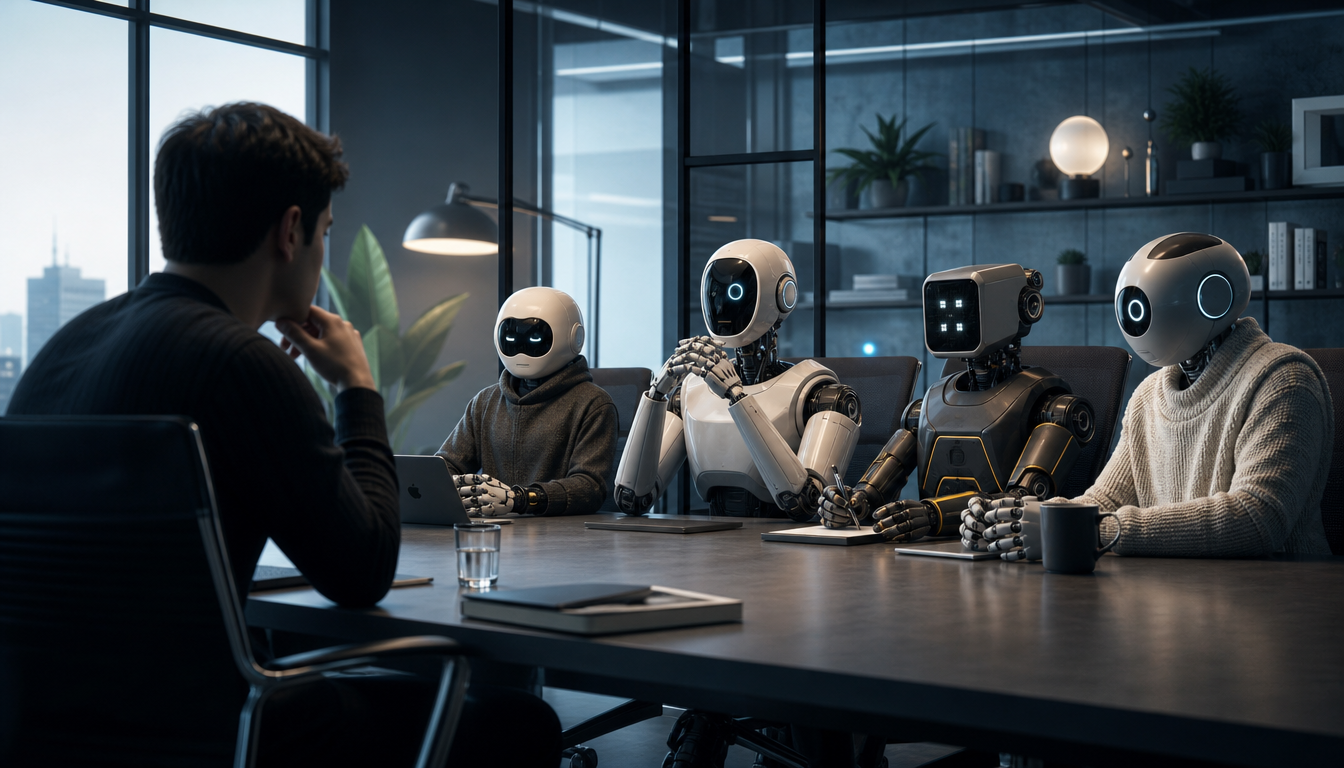
Here is what should reframe how you think about building: a large and growing share of the people using vibe coding tools are not developers at all. Product managers. Operators. Marketers. People who understand problems and customers, not programming languages.
That flips the old startup equation completely.
The traditional model required two things to build a tech company. A technical co-founder to build the product. And capital to hire that co-founder if you could not find one willing to work for equity. The entire startup ecosystem was built around this single bottleneck. Accelerators existed to help you find a technical partner. Pitch competitions judged you partly on whether you had one. Networking events were structured around the assumption that ideas people and build people were different people.
The 2026 model requires one thing: a clear understanding of a problem worth solving.
Tools like Lovable, Cursor, and Bolt let founders go from a prompt to a deployed application in days. Not a prototype. Not a mockup. A working, usable product that real customers can sign up for and pay for. The iteration cycle that used to take weeks of back-and-forth with a developer now happens in an afternoon conversation with an AI tool.
The constraint is no longer “can you build it?” The constraint is “do you know what to build?”
That is a completely different game. And it favors people who have spent years in the real world understanding customers and markets over people who spent years learning syntax.
The Proof Is Not Theoretical
If this sounds like hype, look at what already happened.
Maor Shlomo built Base44 as its sole owner, bootstrapped with no venture funding, using AI tools. He built the product with a small team of eight, grew it to 250,000 users in six months, and sold it to Wix for $80 million in June 2025.
Bootstrapped. AI-built product. $80 million exit.
And while that exit size is exceptional, the pattern beneath it is not. Solo-founded startups surged from 23.7% of all startups in 2019 to 36.3% by mid-2025. That is not a blip or a trend. That is a structural shift in how companies get formed.
The reason is straightforward. When you remove the need for a technical co-founder, you remove the single biggest bottleneck in startup creation. The person with the market insight can now be the same person who builds, ships, and iterates the product. No more months spent searching for the right partner. No more equity negotiations before a single line of code exists. No more waiting.
The go-to-market advantage now belongs to founders who understand distribution, positioning, and customer pain. The people who always had the ideas but never had the technical ability to execute them. Those people can now build.
What the New Moat Actually Looks Like
If coding is no longer the differentiator, what separates the founders who win from the ones who do not?
Three things.
Business insight. Understanding a problem deeply enough to build something people will pay for. This has always mattered. But it used to sit alongside technical skill as a requirement. Now it is the primary requirement. Everything else can be handled by tools.
You can teach an AI to write code. You cannot teach it to spend three years inside an industry and understand what actually frustrates the people working there every day. That knowledge is yours. And in 2026, it is worth more than a computer science degree.
Distribution. Getting your product in front of the right people. AI can help you build. It cannot build your network, your audience, or your reputation. The founders winning right now are the ones who already have attention or know exactly how to earn it.
This is why personal brands matter more now than at any point in the history of tech. If you have an audience that trusts you, you can ship a product on Monday and have paying customers by Friday. If you do not, you are competing for attention with everyone else who can also build fast. Distribution is the moat that AI cannot replicate.
Taste. Knowing what good looks like. AI tools can generate unlimited variations of anything. The skill is choosing the right one. Editing, curating, and refining based on a genuine understanding of what users actually want. Not what looks impressive in a demo. What solves the problem simply and elegantly.
Taste is a human skill. And its value goes up as AI handles everything on the production side.
The 2026 Tool Stack
If you are considering building something, here is what the practical landscape looks like right now.
For first products and MVPs: Lovable is the fastest path from idea to working application. You describe what you want in plain language. It builds it. You iterate through conversation, refining as you go. Founders are shipping usable, deployable products in a single weekend. The learning curve is closer to learning a new app than learning to code.
For scaling beyond the MVP: Cursor is where many founders move when their product needs more sophistication. It functions as an AI-powered code editor where you direct the work and the AI executes. You still do not need to be a developer. But you need to be precise about what you want the product to do and how it should behave.
For deployment and infrastructure: Tools like Bolt handle getting your product live and accessible. What used to be a multi-day DevOps project is now part of the build flow. You ship and deploy in the same session.
The total annual cost of this entire stack is a fraction of what a single developer would cost for one month. That math alone tells you why this shift is permanent.
The Real Barrier
The hardest part of this entire transition has nothing to do with technology.
It is the belief that you need permission to build. That someone with more technical knowledge needs to validate your idea before you can act on it. That you are “not a tech person” and therefore not qualified to create software products.
That belief was reasonable five years ago. It is wrong now.
The founders succeeding with vibe shipping are not the most technical people in the room. They are the most decisive. They identify a problem, they use the tools that exist today, and they ship. They do not wait for a perfect moment or a perfect co-founder or a perfect business plan.
Solo-founded startups at 36.3% and rising. AI writing more of the world's code every year. An $80 million exit by a bootstrapped, non-traditional founder who built the product with AI.
The evidence is not ambiguous. The gate is open.
The only question left is whether you walk through it.
What idea have you been sitting on because you thought you needed a developer?
Related: Conversion Architecture and work with Jackson on business systems.
- Jackson
FAQ
What is vibe shipping and how is it different from vibe coding?
Vibe coding, a term from Andrej Karpathy, is telling an AI what you want and letting it write the code while you iterate in conversation instead of debugging line by line. Vibe shipping is the bigger version: non-technical founders skipping the entire traditional development process and going straight from idea to a deployed, revenue-generating product, with no engineering team and no technical co-founder.
If anyone can build software now, what is the new competitive moat?
Three things. Business insight, meaning understanding a problem deeply enough to build something people pay for. Distribution, meaning the audience, network, or reputation that gets the product in front of the right people. And taste, meaning knowing which of the unlimited AI-generated variations is actually the right one. Coding is no longer the differentiator.
Which tools should a non-technical founder start with?
For a first product or MVP, Lovable is the fastest path from a plain-language description to a working application. For scaling beyond the MVP when the product needs more sophistication, founders move to Cursor, an AI-powered code editor you direct. For deployment and infrastructure, tools like Bolt get the product live in the same build session.
Is the $80 million Base44 exit a realistic example or just an outlier?
The exit size is exceptional, but the pattern underneath it is not. Maor Shlomo built Base44 solo with AI tools, grew it to 250,000 users in six months, and sold it to Wix. The broader structural shift is the real signal: solo-founded startups rose from 23.7% of all startups in 2019 to 36.3% by mid-2025, because removing the need for a technical co-founder removes the biggest bottleneck in startup creation.
Sources
- Vibe coding Wikipedia · February 2, 2025
- 6-month-old, solo-owned vibe coder Base44 sells to Wix for $80M cash TechCrunch · June 18, 2025
- Solo Founders Report Carta · July 1, 2025